Will grass grow faster if you cut it shorter in Albury?
Will grass grow faster if you cut it shorter in Albury? Learn why low mowing can stress turf, expose soil to weeds and leave an uneven finish.
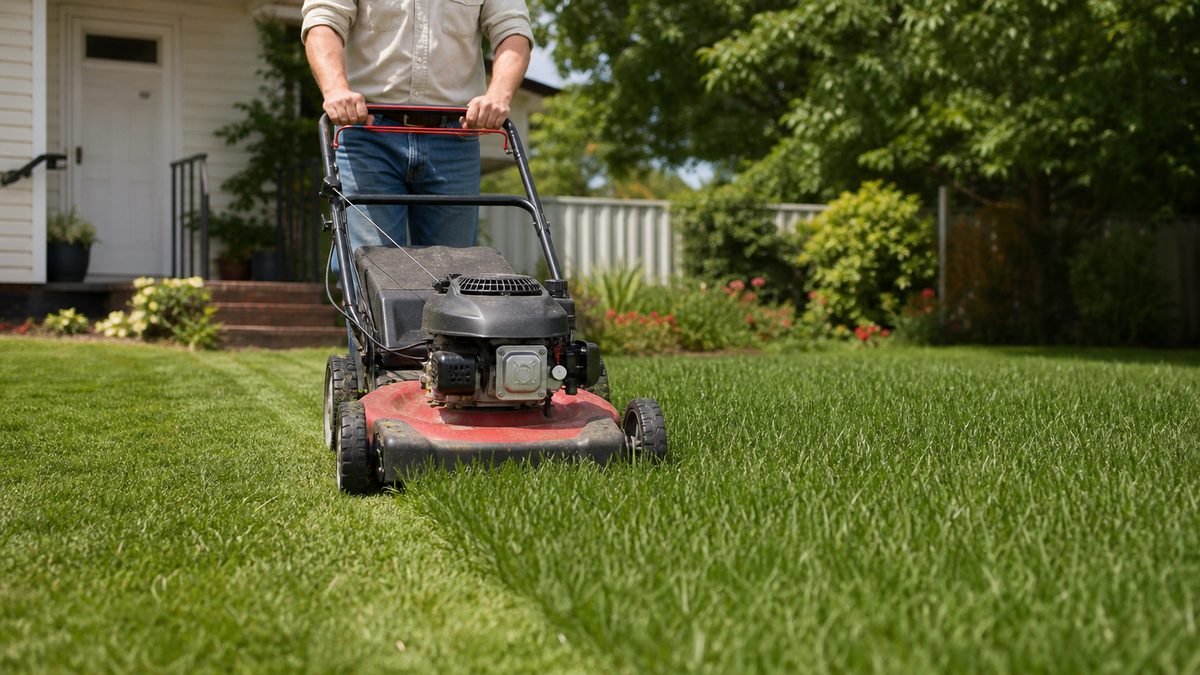
No. Cutting grass shorter does not make its underlying growth rate faster. It can make new growth easier to see because fresh tips stand out above a closely cut surface. That visual change often creates the false sense that the lawn has shot up.
An overly short cut can weaken the result you want. Grass needs green leaf to capture light and support its roots. Removing too much leaf can expose brown stems, open the canopy and leave raised parts of the lawn scalped. Heat, limited moisture and shade can make that damage more severe.
The right goal is not the shortest possible lawn. Aim for turf that stays green, dense and even after mowing. The lawn itself will show whether the mower height suits its type and present condition.
Why can a closely cut lawn seem to rebound so quickly?
Mowing removes leaf tissue that has already grown. It does not switch the grass into a faster biological growth mode. The rate at which grass produces new leaf is shaped more by turf type, temperature, moisture, soil condition and available nutrients.
The illusion comes from contrast. Imagine two patches producing the same amount of new leaf after mowing. One patch still has a useful layer of green blade. The other has been cut close to its stems. Fresh tips will stand out sooner on the second patch, even though both patches added the same amount of growth.
A close cut also changes how you judge height. A small gain looks large beside a very low starting point. The same gain is less obvious in grass that retained more leaf. This is much like noticing a small mark on a plain wall more quickly than on a patterned surface.
Grass may also grow at different rates across one yard. Moist areas can move ahead of dry spots. Turf near a garden bed may have different soil or nutrient access. Shaded grass can remain thin while a nearby open area fills out. Cutting every part very short makes these differences easier to see, but it did not create all of them.
Do not schedule the next lawn mow because a few bright tips have appeared. Check the actual height across several parts of the yard. Look at the colour, density and firmness of the turf as well. A small patch of quick growth should not dictate the mower setting for the entire lawn.
Free guide
The 4-Week Starter Plan
Three short sessions a week, written out exercise by exercise, so you know exactly what to do from day one.
Send me the free planWhat happens when the mower is set too low?
A mower set too low can remove much of the working green blade in one pass. With less leaf left, the grass has less surface available to capture light. That can slow its recovery and reduce the support reaching its roots.
The first warning often appears straight after mowing. A healthy green lawn may turn pale or show wide brown areas. Those areas are usually lower stems, runners or old leaf that had been hidden beneath the green canopy. The mower has cut below the useful surface instead of trimming its top.
Uneven ground raises the risk. A fixed mower setting does not produce the same cut everywhere when the soil has bumps, shallow hollows or raised roots. The mower deck can ride normally across one area and strike much lower on the next high spot. Curves and tight turns can also tilt the deck enough to leave a scalp mark.
Repeated close mowing can keep hitting those exposed areas before they rebuild enough leaf. The lawn may then look patchy even after the surrounding grass turns green. Lowering the mower again to make every patch match can extend the damage.
Dry, shaded or slow-growing turf needs a more conservative approach. Grass recovering from wear also benefits from retaining more leaf. In those conditions, a low cut removes material that the lawn cannot replace as readily as vigorously growing turf with reliable moisture.
Watch what comes out of the mower. A heavy load of long clippings means the cut was aggressive or the lawn had been left too long. Light clippings spread over the lawn are different from wet clumps that sit on the surface. Break up or collect thick deposits so they do not cover small areas of green blade.
Raise the mower when a test pass reveals widespread brown tissue, exposed stems or clear marks on high spots. Do not keep mowing at the same height in the hope that the finish will improve. The damage becomes harder to hide with each pass.
Can mowing grass short create more space for weeds?
Cutting grass too short can make weeds more likely when the cut thins the turf or exposes soil. A dense lawn canopy occupies growing space and limits the light reaching the soil surface. When gaps open, weed seeds have more room to establish.
Short mowing is not the sole cause of weeds. Poor soil condition, uneven moisture and existing bare patches can contribute. Yet a severe cut can make these weak points worse by removing the cover that was helping the lawn compete.
Look between the grass plants after mowing. Visible soil across many small gaps is more useful evidence than lawn height alone. Thin blades, open seams and exposed runners show that the turf is losing coverage. Cutting lower will not fill those spaces.
A very short finish can also make young weeds easy to spot, which may create another false link. The weeds might have been present under the grass before mowing. Their sudden visibility does not prove that one cut caused them. The concern is what happens when close mowing continues and the surrounding turf cannot close the gaps.
Do not respond to new weeds by lowering the mower. Retain more green leaf and find the reason the lawn is thinning. Check whether the weak area stays wet, dries faster than the rest of the yard or receives less light. Also look for mower scalping and compacted routes where people often walk.
The strongest defence is continuous turf coverage. A lawn that stays dense can compete for light and growing room. A lawn repeatedly cut below its healthy canopy may lose that advantage, even if it looks neat for a brief period after each mow.
How should you choose a suitable mowing height?
Choose mowing height from the turf type and its current condition. There is no single low setting that suits every Albury lawn, every season or every part of a yard.
Start higher when you do not know the turf variety or its preferred range. Make a short test pass, stop the mower and inspect the result. You want an even green surface with enough blade left to cover stems and soil. Lower the deck only if the turf remains green, dense and free from scalp marks.
Active growth can handle regular trimming better than slow growth. A lawn with steady moisture and good coverage may accept a closer finish than grass that is dry or recovering from stress. That does not mean the active lawn should be cut as low as the mower allows. It means its response gives you more room to adjust.
Shade changes the decision. Grass in shaded areas often has less growth to spare and may be less dense than turf in open light. Keeping more leaf helps preserve coverage. If one mower height leaves the open lawn green but exposes stems under trees, use a higher setting for the shaded section.
Ground shape matters too. A setting that works on a flat strip can scalp a raised verge or a rounded edge. Raising the deck for uneven areas gives the mower more clearance. It often creates a better-looking result because the colour remains even.
Seasonal conditions should guide each mow. When growth slows or the soil is dry, keep more blade. When the lawn is growing strongly, mow often enough to avoid a drastic height change. Do not lock the mower onto one setting for the whole year and assume the grass must adapt.
Use post-mow feedback instead of relying on the number printed beside the mower lever. Those numbers may describe deck positions rather than the exact finished grass height. Wheel position, ground level and mower design can change the real cut.
The clearest signs of a suitable setting are simple. The lawn stays green after the pass. Coverage looks even. Stems and runners remain mostly hidden. The mower travels without biting into raised ground. If the lawn fails these checks, move the deck higher before finishing the yard.
Before your first session, check you have:
- ✓A clear goal you can measure
- ✓Two or three set training times a week
- ✓Any injuries or health notes written down
- ✓Comfortable shoes and a water bottle
How can you keep the lawn neat without chasing a shorter cut?
A neat lawn comes from a clean and consistent mow. Extreme shortness is a poor substitute for good timing, sharp equipment and a height suited to the grass.
Check the mower blade first. A sharp blade slices the leaf cleanly. A dull edge tears it and can leave pale, ragged tips across the lawn. Those damaged tips may make the surface look rough even when the cutting height is suitable.
Mow when the grass is dry enough to stand and pass through the deck cleanly. Wet blades can bend under the mower instead of cutting at an even level. Wet clippings also stick together and may fall in heavy clumps. If clumps remain, spread or collect them rather than leaving covered patches beneath them.
Avoid waiting until the lawn is long and then forcing it back to a very low finish. Mowing a little earlier allows a less severe cut. If the grass has grown beyond its normal height, bring it down over later mowing sessions instead of removing most of the green blade at once.
Change direction between mows when the yard allows it. Repeated travel along the same path can press grass in one direction and deepen wheel routes in soft ground. A different path helps the mower reach blades that were flattened during the last pass.
Inspect the finish before putting the mower away. Torn tips point to a blade problem. Thick clipping trails suggest that the grass was wet, too long or moving through the deck poorly. Brown arcs and bare high points show that the setting was too low for the ground. Rapid colour loss after mowing is another reason to retain more leaf next time.
Do not treat short mowing as a dependable way to remove thatch. Thatch sits around the base of the turf, while a mower cuts from above. Lowering the deck far enough to reach that layer can strike healthy stems and runners before it solves the cause of the build-up.
A hypothetical example makes the better method clear. Suppose a lawn looks untidy at its usual low setting because raised sections turn brown after every pass. Moving the mower one setting higher may leave a slightly longer blade, yet the lawn can look better because its colour and coverage remain even. The useful measure is the finished surface, not how close the mower deck came to the soil.
For your next mow, check the blade, start one setting higher than your usual low cut and make a test pass. Keep that height if the turf remains greener, denser and more even.
Ready to get started?
Tell us what you want to achieve and we'll put together a plan that fits your week.
Get my plan Contact us